
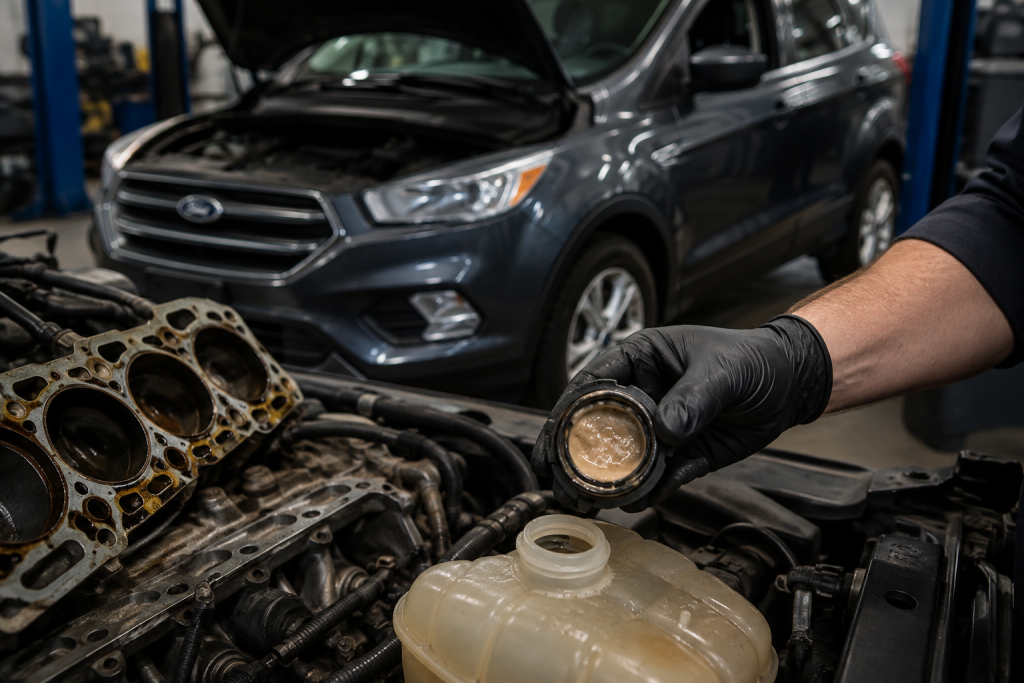
Expert Insights from B.A.T. Boys Auto Repair in Branson, MO
At B.A.T. Boys Auto Repair in Branson, Missouri, our ASE-certified technicians regularly diagnose complex engine concerns that other shops often misidentify. One issue we see with increasing frequency in certain Ford Escape models is coolant intrusion-an internal engine problem that can quietly develop and then escalate into serious damage if it isn’t caught early. Because this failure often mimics more common issues like ignition or sensor faults, accurate diagnosis is critical.
For drivers across Branson and the Ozarks, where temperature swings and stop-and-go traffic place added stress on engines, recognizing the early warning signs can prevent costly repairs and extended downtime. In this guide, we’ll explain what coolant intrusion is, how it develops, the symptoms experienced technicians look for, and why proper testing is essential before any parts are replaced.
What Coolant Intrusion Means for Your Ford Escape
Coolant intrusion is most commonly associated with certain Ford Escape engines, particularly EcoBoost models, where internal engine design and long-term wear can create pathways for coolant to leak into the cylinders. Unlike an external coolant leak, which is often visible, coolant intrusion happens inside the engine and can go unnoticed until symptoms begin to appear.
In a properly functioning engine, coolant flows through designated passages to regulate temperature and prevent overheating. When those passages fail or become compromised, coolant can enter the combustion chamber. Once this happens, it interferes with the air-fuel mixture and can cause misfires, rough running conditions, and increased wear on internal components.
One of the challenges with coolant intrusion is that it is often mistaken for more common issues like ignition coil failure or spark plug wear. Many vehicle owners replace these parts hoping to resolve the problem, only to find that the symptoms persist. This is why accurate testing and professional evaluation are critical before replacing any components. A thorough inspection using engine diagnostics in Branson can identify the root cause and prevent unnecessary repairs.
Early Warning Signs You Should Never Ignore
Recognizing the early signs of coolant intrusion can help prevent extensive engine damage. One of the first symptoms many drivers notice is a gradual loss of coolant without any visible leaks. This often leads to confusion, as the coolant reservoir may need to be topped off regularly even though there are no signs of leakage under the vehicle.
Another common sign is a rough idle or intermittent misfire, especially during cold starts. When coolant enters the combustion chamber overnight, it can affect ignition when the engine is first started. This may feel like a brief hesitation or shaking that improves as the engine warms up, but it should never be ignored.
White exhaust smoke is another indicator that coolant may be burning inside the engine. While condensation can cause light vapor on cold mornings, persistent white smoke accompanied by a sweet smell is a strong warning sign. Drivers may also notice that the check engine light comes on intermittently, often related to misfire codes that do not point to a clear ignition issue.
In many cases, these symptoms appear gradually, which can lead drivers to delay seeking professional help. However, what starts as a minor issue can quickly develop into significant internal engine damage if coolant continues to enter the cylinders. For additional safety and vehicle information, drivers can review manufacturer and safety guidance through resources like the National Highway Traffic Safety Administration, which provides helpful information on vehicle maintenance and recalls.
How Experienced Mechanics Diagnose Coolant Intrusion
Diagnosing coolant intrusion requires more than a visual inspection. Experienced technicians rely on a combination of testing procedures to confirm whether coolant is entering the combustion chamber and to determine the extent of the damage.
One of the first steps is a cooling system pressure test. This test helps identify whether the system is losing pressure internally, which can indicate a leak inside the engine. However, pressure testing alone may not provide a complete picture, especially in early stages of failure.
Technicians may also use a borescope to inspect the inside of the cylinders. This allows them to look for signs of coolant residue or abnormal wear patterns that would not be visible from the outside. In addition, spark plugs may be removed and inspected for signs of contamination, which can provide valuable clues about which cylinder is affected.
In some cases, a chemical test is used to detect combustion gases in the cooling system. This can confirm whether there is a breach between the combustion chamber and the cooling passages. These diagnostic steps are essential for avoiding misdiagnosis and ensuring that the correct repair is performed the first time.
Why Proper Cooling System Maintenance Matters
While coolant intrusion is often related to internal engine issues, maintaining the cooling system can still play an important role in preventing additional damage. Overheating, pressure buildup, and degraded coolant can all contribute to increased stress on engine components.
Regular inspections of the radiator, thermostat, water pump, and hoses help ensure that the system is operating efficiently. When these components are not functioning properly, the engine may run hotter than intended, increasing the likelihood of internal failures over time.
Drivers in Branson and the surrounding areas often experience a wide range of driving conditions, from steep terrain to heavy seasonal traffic. These conditions can place added demand on the cooling system, making regular maintenance even more important. Scheduling a A/C and heating repair and cooling system service in Branson can help identify potential issues before they lead to more serious engine problems.
Schedule a Professional Engine Inspection in Branson, MO
Coolant intrusion in a Ford Escape is not a condition that should be monitored or guessed at. What begins as a minor symptom-such as a small drop in coolant level or a brief cold-start misfire-can quickly develop into internal engine damage if the underlying cause is not identified. The key to protecting your vehicle is early, accurate diagnosis performed by experienced technicians who understand how to confirm the issue and recommend the correct repair.
If you are noticing signs like unexplained coolant loss, rough running, or persistent warning lights, the next step is to have the vehicle properly evaluated. At B.A.T. Boys Auto Repair, we focus on advanced diagnostics to ensure problems are identified correctly the first time, helping you avoid unnecessary repairs and protect your engine.
To get answers and move forward with confidence, you can schedule an inspection in Branson with our team or call us directly at (417) 339-2697. Our goal is to provide clear, honest guidance so you can make the best decision for your vehicle.

Jeremy McQueen has dedicated more than 21 years to the automotive repair industry and has proudly served as the owner of B.A.T Boys Auto Repair for the past 10 years. As an ASE Master Certified Technician and HVAC Certified Technician, Jeremy is committed to accurate diagnostics, quality repairs, and providing every customer with honest recommendations they can trust. His goal is to ensure B.A.T Boys Auto Repair continues to be your personal pit crew in Branson, MO, delivering dependable service that keeps local drivers and visitors safely on the road.